Clear Communication: Your Team's Key to Avoiding Conflict
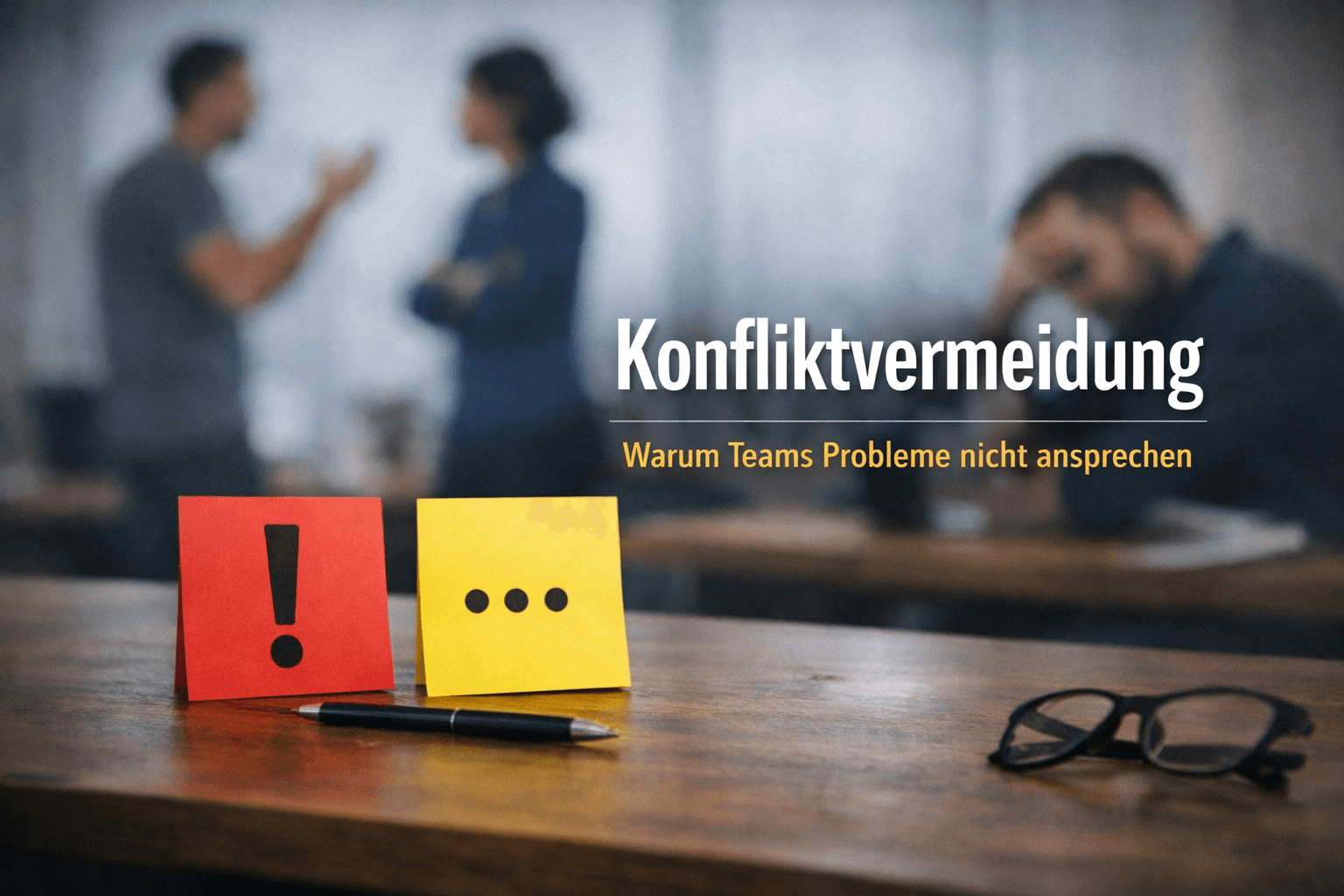
Clear communication within the team is one of the most subtle — yet most dangerous — patterns in business. Not because people want to ignore problems, but because they've learned that conflict can be uncomfortable, risky, or consequential. If you identify the root causes of misunderstandings and address them deliberately, you can dramatically improve collaboration.
The result: important issues go unaddressed. Tensions stay unspoken. Decisions get postponed. And teams lose clarity.
Why Conflict Avoidance Happens
Conflict avoidance isn't a personality flaw. It's a protective mechanism.
Typical causes:
- Fear of negative reactions
- Bad past experiences with criticism
- No culture of open conversation
- Leaders who avoid conflict themselves
- Teams that value harmony over clarity
- Unclear roles and expectations
- No consequences for poor behavior
If conflicts can't be raised safely, they don't get raised at all.
Typical Symptoms in Everyday Work
You can spot conflict avoidance in phrases like:
- "I didn't want to cause any trouble."
- "It wouldn't have changed anything anyway."
- "I didn't want to ruin the mood."
- "I figured it would sort itself out."
And in behavior patterns like:
- Problems get "swept under the rug"
- Decisions get postponed
- Tension is palpable, but no one addresses it
- Employees talk about each other instead of to each other
- Leaders step in too late
- Conflicts suddenly escalate, even though they'd been simmering for a long time
Conflicts don't disappear when you avoid them — they keep growing in the background.
The Real Cause: A Lack of Clarity & Psychological Safety
Conflicts only get addressed when clarity and safety are both present:
- Clarity – What exactly is the problem?
- Safety – Can I raise it without facing negative consequences?
If either one is missing, conflict avoidance takes over.
What Leaders Can Do — Calm, Clear, Effective
1. Address Conflicts Early
Don't wait until it escalates. Instead, say:
"I'm sensing there's something going on here. Let's talk it through."
2. Give the Conversation a Clear Structure
Three simple questions are enough:
- What happened?
- What do you need?
- What's the next step?
3. Hand Responsibility Back
When employees talk about someone instead of to them:
"Have you talked to them about it directly yet?"
4. Normalize Criticism
Criticism isn't an attack — it's a tool for clarity.
5. Set Consequences — Calmly, But Clearly
Don't threaten. Don't raise your voice. Instead:
"We made an agreement. I expect us to keep it."
Why This Pattern Massively Holds Teams Back
Conflict avoidance leads to:
- Simmering tension
- A lack of clarity
- Slow decision-making
- Passive-aggressive behavior
- Declining motivation
- Rising frustration
- Poor collaboration
In short: teams lose energy, focus, and clarity.
How to Stop This Pattern
The key is clarity:
- Clear expectations
- Clear roles
- Clear conversations
- Clear consequences
- Clear ownership
When there's clarity, conflicts don't grow bigger — they get resolved.
Further Guides & Content
These resources dig deeper into drama-free leadership and help you recognize patterns, create clarity, and hand responsibility back to where it belongs.
Core Guide Pages
- Leadership Guide – Clarity & Structure An overview of all our guides, topics, and resources.
- Success Blockers – The Patterns Holding Every Company Back The core system behind every pattern that blocks teams.
- Corporate Actors, PowerPoint Rangers & Buzzword Bingo – How Modern Companies Fail at Show – Learn more about corporate actors, PowerPoint rangers, and buzzword bingo in our comprehensive guide to show culture.
Key Articles from Our Guide Series
- Early Warning Signs of Team Chaos
- How Bosses Unknowingly Create Success Blockers
- How to Stop Low Performers
🧩 FAQ – Conflict Avoidance in Teams
❓ Why do teams avoid conflict?
Because conflict feels uncomfortable, and many people believe harmony is more productive than clarity. In reality, avoidance just lets problems simmer and causes real losses.
❓ What are the consequences of conflict avoidance?
Decisions get delayed, problems grow in the background, and performance declines. Conflict avoidance is a silent success blocker.
❓ How do I recognize conflict avoidance in everyday work?
When criticism never comes up, problems keep getting "postponed," decisions get discussed endlessly, or everyone is "nice" but nothing actually moves forward.
❓ How do you resolve conflict constructively?
Through clear communication, honest feedback, and the courage to address uncomfortable topics directly. Leadership means being able to sit with tension.
Latest Posts
-

Fear of Change: The Silent Killer of Business Growth
Success avoidance in organizations is a common phenomenon, reinforced by fear of failure and unclear expectations. -

Poor Team Communication: The Leading Cause of Failure
Poor Team Communication: The Leading Cause of Failure. Teams rarely fail due to a lack of knowledge or clarity. They fail because of poor team communication working in the background — quiet, but relentless. Why teams fail – the invisible mechanisms that block performance. These mechanisms don't develop overnight. They grow out of routines, unspoken expectations, and structures that… <strong>Poor Team Communication: The Leading Cause of Failure</strong> Read more -

Setting Professional Boundaries: The Key to More Clarity and Efficiency
Setting professional boundaries for clarity and efficiency in the workplace. Learn to respect your own needs and avoid stress. -

An Overloaded Team: The Real Reason for Stagnation
Overload & Chaos: The Silent Leadership Pattern That Paralyzes Every Team. Many bosses see overload as a sign of dedication. In reality, it's often the visible symptom of leadership chaos. "Overload & chaos – the silent leadership pattern that paralyzes teams." When everything seems equally important, nothing gets clearly prioritized, and everyone is "somehow busy," nothing actually…An Overloaded Team: The Real Reason for Stagnation Read more