Spotting Early Warning Signs in Your Team — and Acting on Them
Most leaders don't fail because they lack knowledge — they fail because they spot early warning signs in their team too late. Ignore the signs pointing to trouble, and your team will quickly grind to a halt.
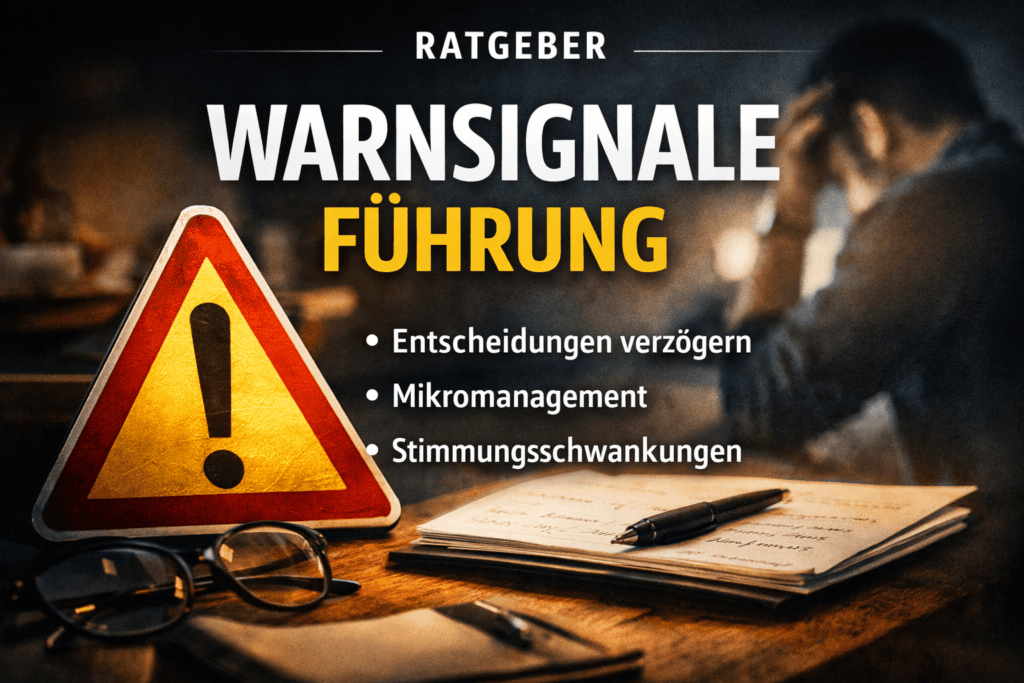
Typical Warning Signs in Leadership
Typical warning signs show up long before a team actually starts to stumble. They creep in gradually, often unnoticed, and have a direct effect on clarity, speed, and collaboration. Spot these patterns early, and you prevent stress, bad decisions, and unnecessary friction.
An Example From Everyday Work
Monday morning. The team is waiting for a decision, but the boss postpones it for the third time. Nobody says anything — but everyone can feel it: something's off here. The mood shifts, uncertainty spreads, and suddenly the team is discussing guesswork more than solutions.
Analysis: Why These Patterns Emerge
Warning signs in leadership rarely appear out of nowhere. They develop gradually — and that's exactly what makes them dangerous.
Typical causes:
- Overload: When leaders are juggling too many things at once.
- Decision pressure: Fear of making mistakes leads to delays.
- Unclear priorities: When everything is important, nothing ends up being important.
- Communication fatigue: Messages become vague, meetings end without any outcome.
- Loss of control: Either micromanagement or total absence.
These patterns are early indicators of team stress, conflict, and declining performance.
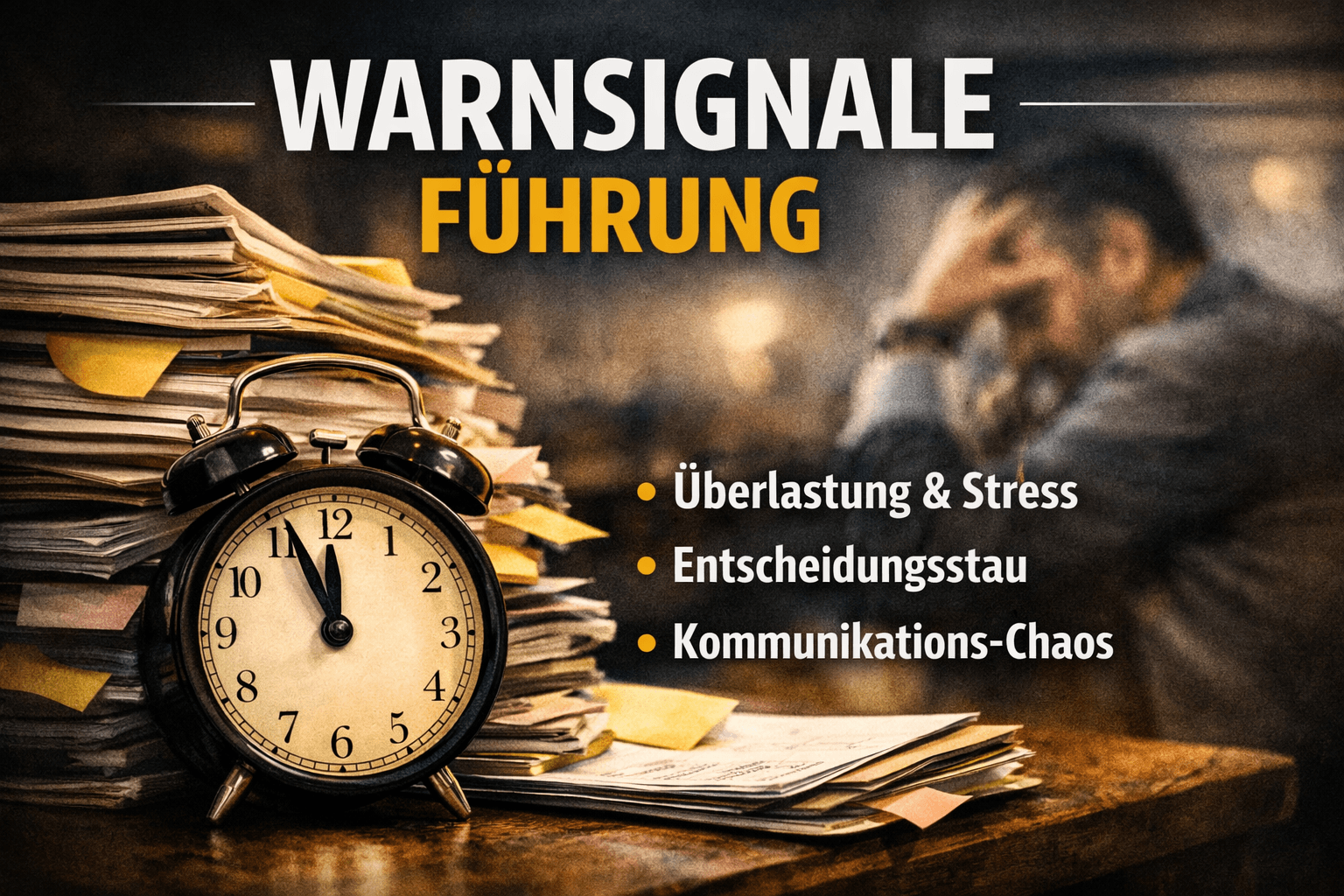
Typical Warning Signs You Should Take Seriously
- Decisions get postponed on a regular basis
- Priorities change on a weekly basis
- Meetings end without clear outcomes
- Mood swings in leadership
- Micromanagement or complete passivity
- Overload gets ignored or downplayed
If several of these show up at the same time, it's a clear sign: leadership is losing clarity.
The Fix: Four Steps to More Clarity
Step 1: Cut Down on Priorities
A maximum of three active priorities at a time. Everything else is noise, and it creates chaos.
Step 2: Make Decisions Within 48 Hours
Decisions left hanging create uncertainty. The 48-hour rule creates clarity and momentum.
Step 3: Simplify Communication
Short sentences. Clear expectations. No PowerPoint theater, no smoke screens.
Step 4: Take Early Warning Signs Seriously
If you catch warning signs before they escalate, you lead more steadily — and prevent stress within your team.
Frequently Asked Questions About Warning Signs
❓ What are typical warning signs in leadership?
Typical warning signs include delayed decisions, unclear priorities, micromanagement, mood swings, and a lack of communication. They tend to creep in gradually and slow teams down early on.
❓ Why do leaders often overlook warning signs?
Stress, overload, and decision pressure distort perception. Many leaders end up only reacting instead of actively leading — which means warning signs go unnoticed for a long time.
❓ How do I spot early on that a team is under stress?
If decisions stall, conflicts increase, or tasks keep getting reprioritized, that's a clear early warning sign. Declining motivation and a rising error rate are also strong indicators.
❓ How can warning signs in leadership be reduced?
Through clear priorities, fast decisions, simple communication, and regular reflection. Leadership becomes more stable when problems are addressed early instead of ignored.
Further Guides & Resources
These resources go deeper into leadership without drama, helping you recognize patterns, create clarity, and hand responsibility back where it belongs.
Core Guide Pages
- Guides & Leadership – Clarity & Structure An overview of all guides, topics, and resources.
- Success Blockers – The Patterns That Hold Every Company Back The core system behind every pattern that blocks teams.
- Corporate Actors, PowerPoint Rangers & Bullshit Bingo – How Modern Companies Fail Through Show – Find out more about corporate actors, PowerPoint rangers, and bullshit bingo in our comprehensive show-culture guide.
Key Articles From Our Guide Series
- Early Warning Signs of Team Chaos
- How Bosses Unconsciously Create Success Blockers
- How to Stop Low Performers
Latest Posts
-

Fear of Change: The Silent Killer of Business Growth
Success avoidance at work is a common phenomenon, reinforced by fear of failure and unclear expectations. -

Poor Team Communication: The Main Cause of Failure
Poor Team Communication: The Main Cause of Failure Teams rarely fail due to lack of knowledge or motivation. They fail because of poor team communication working in the background — quiet, but relentless. Why teams fail – the invisible mechanisms that block performance. These mechanisms don't appear overnight. They grow out of routines, unspoken expectations, and structures that… <strong>Poor Team Communication: The Main Cause of Failure</strong> read more -

Setting Professional Boundaries: The Key to More Clarity and Efficiency
Setting professional boundaries is essential for clarity and efficiency in the workplace. Learn to respect your own needs and avoid stress. -

An Overloaded Team: The Real Reason for Standstill
Overload & Chaos: The Silent Leadership Pattern That Paralyzes Every Team Many bosses see overload as a sign of dedication. In reality, it's often the visible symptom of leadership chaos. "Overload & Chaos – the silent leadership pattern that paralyzes teams." When everything matters at once, nothing is clearly prioritized, and everyone is "somehow busy," the result isn't… Overload & Chaos: The Silent Leadership Pattern That Paralyzes Every Team read more