Spotting and Avoiding Empty Job Phrases
Why These Phrases Are So Dangerous
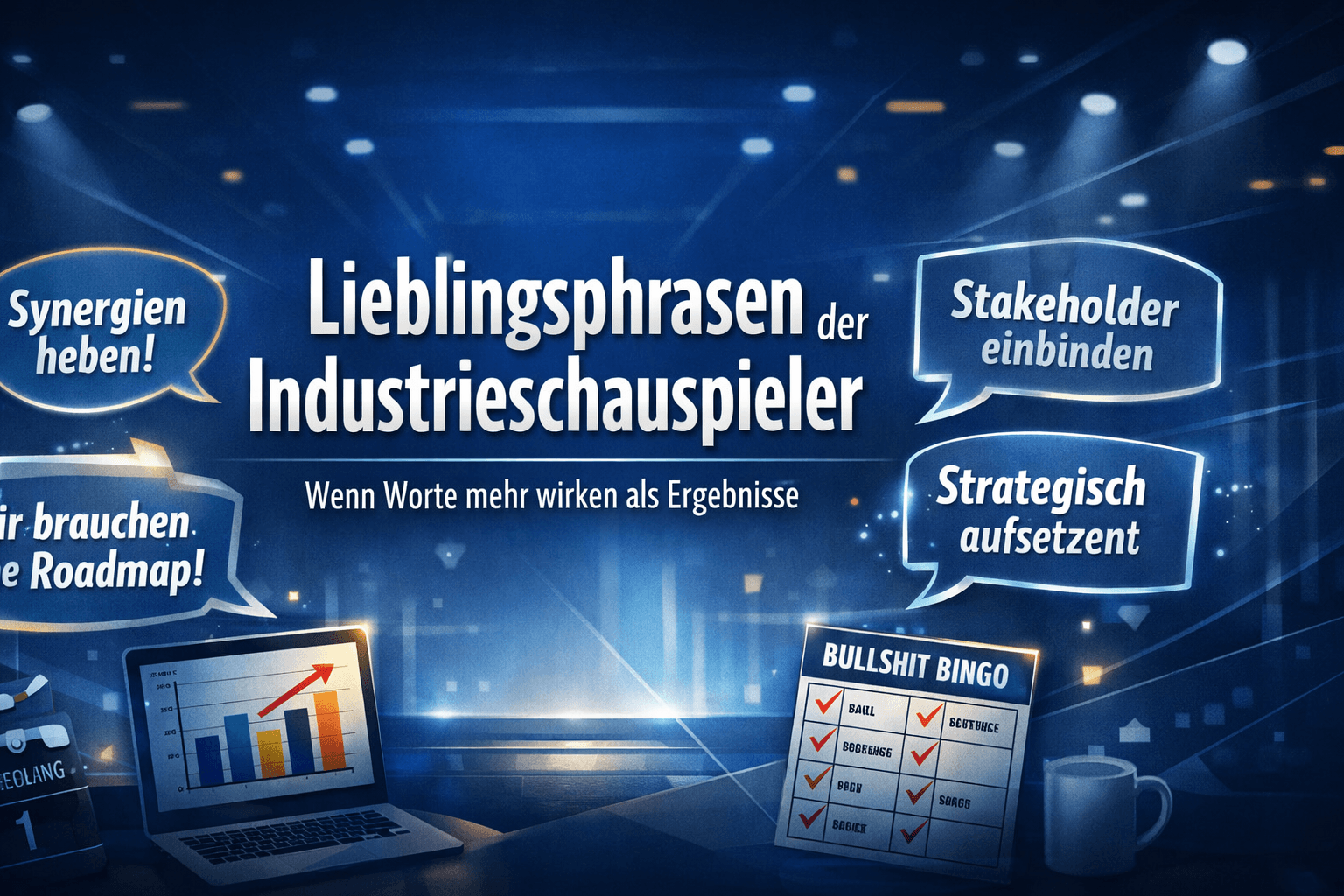
Spotting empty job phrases is essential for improving communication at work. These phrases aren't just filler — they often stand between you and real results. They distract from accountability and clarity. Once you understand what's really behind them, you can either use them deliberately or steer clear of them.
Their phrases are like fog machines: they create atmosphere, but no substance.
And that's exactly why they're so popular.
1. "We need to leverage the synergies."
The mother of all buzzword phrases.
Sounds like: planning, progress, collaboration. Actually means: nobody knows what we're supposed to do.
This phrase is so empty you could bottle it and sell it as air freshener.
2. "We're already very far along on that."
Sounds like: progress. Actually means: there's nothing. Nothing at all.
If someone is "very far along" but has nothing to show for it, they're exactly nowhere.
3. "We need to set this up strategically."
Sounds like: leadership. Actually means: we have no idea where to start.
Corporate actors love the word "strategic" because it means everything and nothing at once.
4. "We need to involve the stakeholders early on."
Sounds like: accountability. Actually means: we're putting off the decision indefinitely.
"Stakeholder involvement" is often just another way of saying "We don't dare."
5. "We need a roadmap."
Sounds like: structure. Actually means: we want another meeting.
Roadmaps are the PowerPoint equivalent of "We should really talk about this."
6. "We should manage the messaging around this."
Sounds like: professionalism. Actually means: we're going to make a slide.
Communication plays a central role. But "managing the messaging" is often just show with no substance behind it.
7. "This is a really important step."
Sounds like: significance. Actually means: we haven't achieved anything, but we want applause anyway.
When someone has to emphasize how important something is, it usually isn't.

🎯 Why These Phrases Work So Well
Because they:
- hurt no one
- pin no one down
- hold no one accountable
- sound professional
- leave room for interpretation
They're the perfect tool for people who want visibility without accountability.
🔥 How to Call Them Out
Just ask a single question:
"What exactly do you mean by that?"
Corporate actors hate precision. They live off the fog.
🧠 Bottom Line: Phrases Are the Tools of a Show Culture
Real doers don't need phrases. They don't need a stage. They don't need a show.
They only need one thing:
👉 Results.
📘 Keep Reading: The Complete Guide to Show Culture & Corporate Actors
If you want to dig deeper into how this behavior paralyzes companies and how you can counter it:
👉 Corporate Actors, PowerPoint Rangers & Buzzword Bingo
Related Guides & Resources
These resources dig deeper into leadership without the drama, helping you recognize patterns, create clarity, and hand responsibility back where it belongs.
Core Guide Pages
- Guides & Leadership – Clarity & Structure An overview of all guides, topics, and playbooks.
- Success Blockers – The Patterns That Hold Every Company Back The core system behind every pattern that blocks teams.
- Corporate Actors, PowerPoint Rangers & Buzzword Bingo – How Modern Companies Fail at Show – Find out more about corporate actors, PowerPoint rangers, and buzzword bingo in our complete guide to show culture.
Key Articles From Our Guide Series
- Early Warning Signs of Team Chaos
- How Bosses Unknowingly Create Success Blockers
- How to Stop Low Performers
🧩 FAQ – Favorite Phrases of Corporate Actors
❓ What are typical favorite phrases of corporate actors?
Phrases like "We're leveraging the synergies," "We need a roadmap," or "All stakeholders need to weigh in" — they sound important but say very little.
❓ Why do people in companies use phrases like this?
Because they simulate competence. Buzzwords create the impression of structure and planning without ever delivering real clarity.
❓ How can I spot corporate acting in everyday work?
When meetings are full of buzzwords but produce no decisions, no accountability, and no results. Lots of talking, very little impact.
❓ How should I deal with phrases like this?
By asking concrete follow-up questions: "What exactly do you mean?", "How are we going to implement that?", "Who's taking this on?" — the show falls apart the moment clarity is demanded.
Latest Posts
-
The 7 Favorite Phrases of Corporate Actors – and What They Really Mean
The 7 Favorite Phrases of Corporate Actors – and What They Really Mean Why These Phrases Are So Dangerous Corporate actors live on language. Not on results. Not on accountability. Not on clarity. Their phrases are like fog machines: they create atmosphere, but no substance. And that's exactly why they're so popular. 1. "We need to leverage the synergies." The… The 7 Favorite Phrases of Corporate Actors – and What They Really Mean read more -

Show Beats Substance – and How to Turn That Around
Show Beats Substance – and How to Turn That Around When Impact Gets Replaced by Performance In many companies, what matters isn't what gets achieved, but how it looks. Results get staged, meetings turn into shows, and presentations replace real progress. The problem: 👉 Substance loses to show. 1. The Stage Matters More Than the Result Corporate actors know:… Show Beats Substance – and How to Turn That Around read more -

Why Real Doers Don't Need a Show
Why Real Doers Don't Need a Show Real Doers Come Across Differently – and That Unsettles Many People In companies shaped by presentations, meetings, and buzzwords, real doers often seem like outsiders. They're not loud. They're not constantly visible. They don't speak in phrases. And that's exactly what makes them so valuable. While corporate actors chase the stage,… Why Real Doers Don't Need a Show read more -
Buzzword Bingo of the Day: "Leveraging the Synergies"
Buzzword Bingo of the Day: "We Need to Leverage the Synergies" Why This Phrase Is So Popular "Leveraging synergies" sounds like strategy, efficiency, progress. In reality, it usually means: "We don't really know what we're doing, but it sounds good." It's the favorite line of corporate actors who replace substance with language. 1. "Synergies" Is Code for a Missing… Buzzword Bingo of the Day: "We Need to Leverage the Synergies" read more