How to Spot a Corporate Actor Instantly

1. They Talk About Visibility – But Never About Results
The 5 signs that you're listening to a corporate actor are often subtle, but they matter. These performers use big words to dress up their message: "This topic needs more visibility." "We need more awareness around this." "This should be charged strategically." But behind these phrases, there's often nothing of substance. Pay attention to how they communicate and what they're actually offering.
It all sounds important. The catch: not a single result ever shows up.
Real doers talk about progress. Corporate actors talk about perception.
2. They Present Slides They Don't Even Understand Themselves
PowerPoint is their natural habitat. The more slides, the less substance.
Typical traits:
- 42 slides
- 17 buzzwords
- 0 concrete actions
- 1 overblown conclusion: "We're on a good path."
If, while listening, you get the feeling the slide knows more than the speaker — you're sitting in front of a corporate actor.
3. They Don't Answer Questions – They Dance Around Them
Ask something concrete. You'll get:
- a vision
- a metaphor
- a "we need to look at this holistically"
- but never an answer
Corporate actors are masters at avoiding answers, because answers can be checked. And being held accountable is their natural enemy.
4. They Never Take Responsibility – But Always Take the Stage
When something goes well: "That was my idea."
When something goes wrong: "The team didn't execute it properly."
Corporate actors aren't interested in results — they're interested in roles.
And the role of "organizational hero" is their favorite one to play.
5. They Look Extremely Busy – But Deliver Nothing
They dash from meeting to meeting, have "no time," are "completely booked," and still somehow manage to not finish a single task.
Being busy isn't the same as being productive. But it looks like it. And that's exactly what they're counting on.
🎯 Bottom Line: You Recognize Corporate Actors Not by What They Do – But by What They Don't Do.
They don't deliver results. They deliver a show.
And that's exactly why they hold companies back — often for years, without anyone noticing.
🔗 If You Want to Dig Deeper
Corporate actors, PowerPoint rangers, and buzzword bingo aren't a coincidence. They're symptoms of an environment that puts show above substance.
That's exactly what our complete guide is about:
👉 Corporate Actors, PowerPoint Rangers & Buzzword Bingo – How Modern Companies Fail at Show
This article is just the starting point. The guide shows you how to recognize these patterns, defuse them, and turn them around.
Related Guides & Resources
These resources dig deeper into leadership without the drama, helping you recognize patterns, create clarity, and hand responsibility back where it belongs.
Core Guide Pages
- Guides & Leadership – Clarity & Structure An overview of all guides, topics, and playbooks.
- Success Blockers – The Patterns That Hold Every Company Back The core system behind every pattern that blocks teams.
- Corporate Actors, PowerPoint Rangers & Buzzword Bingo – How Modern Companies Fail at Show
Key Articles From Our Guide Series
- Early Warning Signs of Team Chaos
- How Bosses Unknowingly Create Success Blockers
- How to Stop Low Performers
🧩 FAQ – Spotting a Corporate Actor
❓ How can I spot a corporate actor right away?
By their exaggerated presence, plenty of words, and very little substance. They're visible everywhere, but rarely effective. (As the guide puts it: "They're extremely present — but rarely effective.")
❓ Why do corporate actors often seem competent?
Because they're strong rhetorically and use buzzwords flawlessly. ("They speak fluent buzzword.")
❓ Why do managers fall for them?
Because presentation often seems more important than substance. ("People judge competence by perception.")
❓ How do you call out a corporate actor without being harsh?
By asking concrete questions like "How exactly does that work?" or "Please show me." ("Concrete questions cut off the show's oxygen supply.")
Latest Posts
-
The 7 Favorite Phrases of Corporate Actors – and What They Really Mean
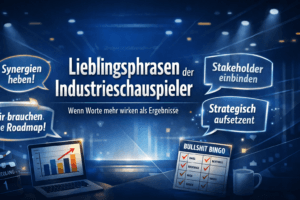
The 7 Favorite Phrases of Corporate Actors – and What They Really Mean Why These Phrases Are So Dangerous Corporate actors live on language. Not on results. Not on accountability. Not on clarity. Their phrases are like fog machines: they create atmosphere, but no substance. And that's exactly why they're so popular. 1. "We need to leverage the synergies." The… The 7 Favorite Phrases of Corporate Actors – and What They Really Mean read more -

Show Beats Substance – and How to Turn That Around
Show Beats Substance – and How to Turn That Around When Impact Gets Replaced by Performance In many companies, what matters isn't what gets achieved, but how it looks. Results get staged, meetings turn into shows, and presentations replace real progress. The problem: 👉 Substance loses to show. 1. The Stage Matters More Than the Result Corporate actors know:… Show Beats Substance – and How to Turn That Around read more -

Why Real Doers Don't Need a Show
Why Real Doers Don't Need a Show Real Doers Come Across Differently – and That Unsettles Many People In companies shaped by presentations, meetings, and buzzwords, real doers often seem like outsiders. They're not loud. They're not constantly visible. They don't speak in phrases. And that's exactly what makes them so valuable. While corporate actors chase the stage,… Why Real Doers Don't Need a Show read more -

Buzzword Bingo of the Day: "Leveraging the Synergies"
Buzzword Bingo of the Day: "We Need to Leverage the Synergies" Why This Phrase Is So Popular "Leveraging synergies" sounds like strategy, efficiency, progress. In reality, it usually means: "We don't really know what we're doing, but it sounds good." It's the favorite line of corporate actors who replace substance with language. 1. "Synergies" Is Code for a Missing… Buzzword Bingo of the Day: "We Need to Leverage the Synergies" read more